Batari’s Box: The Simple Leadership Tool That Explains Why Your Mood Shapes Your Team
Batari’s Box: The Simple Leadership Tool That Explains Why Your Mood Shapes Your Team
Leaders often underestimate just how contagious they are. Not their skills. Not their strategy. Their state of mind.
If you’ve ever walked into a room and instantly felt the tension—or the energy—you’ve experienced the dynamic at the heart of Batari’s Box. It’s a deceptively simple model that explains how a Leader’s attitude and behaviour ripple through a team, shaping culture, performance and even wellbeing.
And in a world where psychological safety, engagement and mental health are now core Leadership responsibilities, Batari’s Box isn’t just interesting. It’s essential.
What Is Batari’s Box?
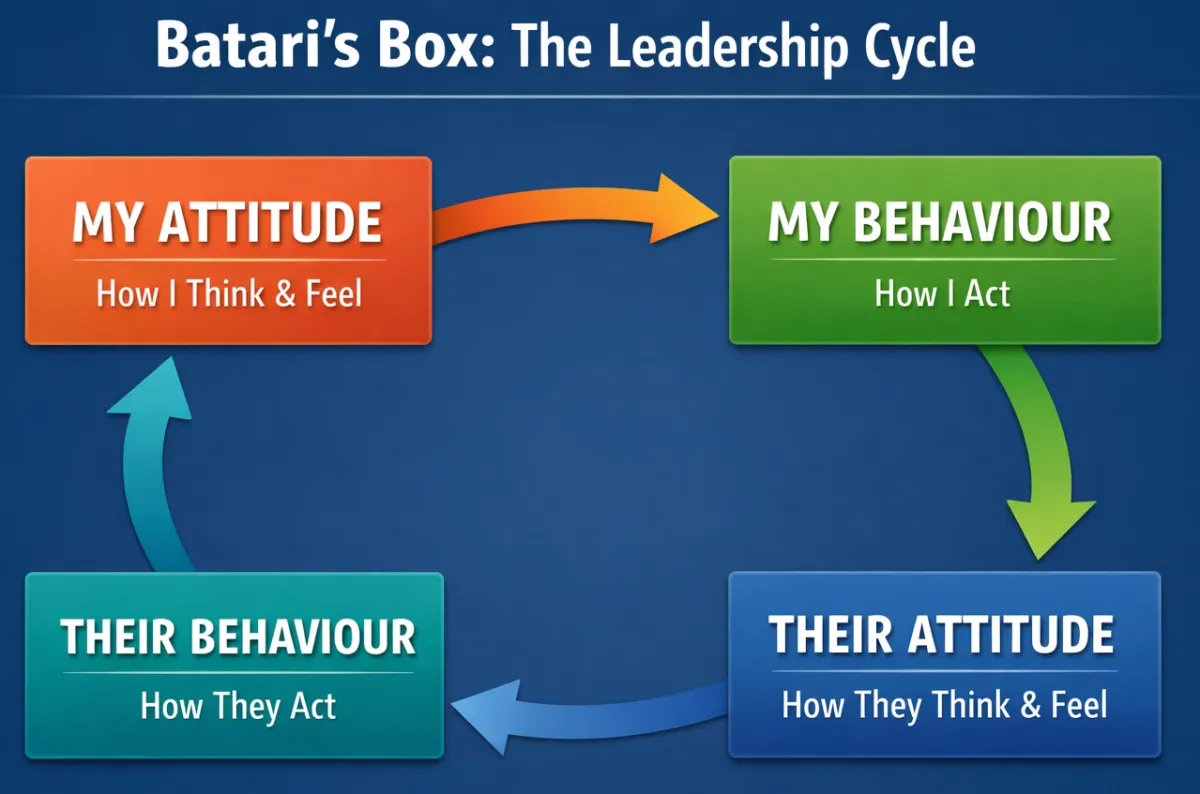
Batari’s Box illustrates a continuous feedback loop between attitude and behaviour—yours and everyone else’s.
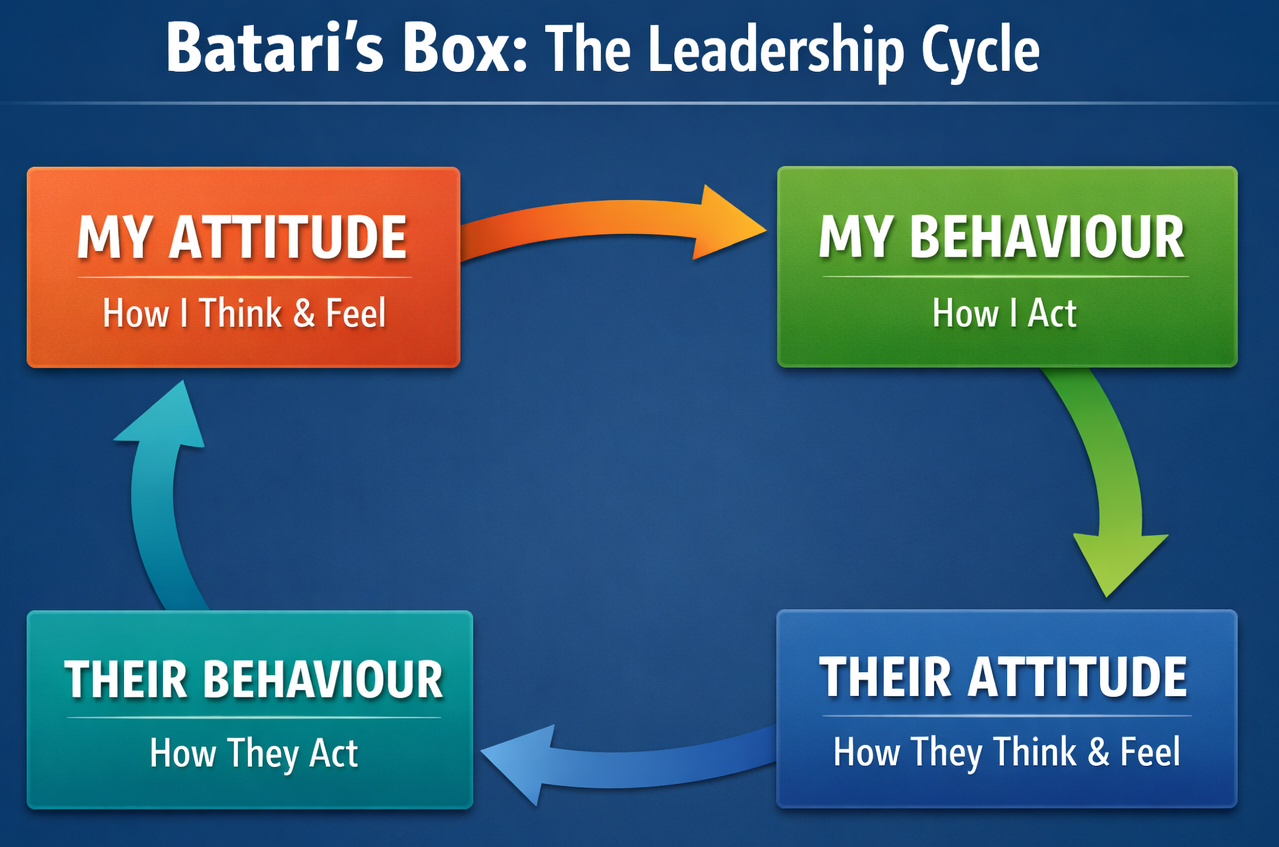
Your attitude shapes your behaviour.
(If you’re stressed, impatient, or optimistic, it shows.)Your behaviour shapes other people’s attitudes.
(Your team reads your tone, body language and reactions.)Their attitude shapes their behaviour.
(They become more open, defensive, energised, or withdrawn.)Their behaviour loops back to influence your attitude.
(And the cycle continues.)
This cycle is well‑described in leadership and personal development literature: your mindset drives your outward behaviour, which then influences how others respond to you, creating either a positive or negative spiral.
Why Batari’s Box Matters for Leaders
Leadership isn’t neutral. You’re always signalling something—intentionally or not.
1. You Set the Emotional Tone
Teams take their cues from leaders.
If you show up calm, curious, and constructive, people mirror it.
If you show up frustrated or closed, they mirror that too.
Research-backed leadership models consistently show that emotional contagion is real—and Leaders are the primary carriers.
2. It Explains Why Small Moments Matter
Batari’s Box highlights that micro‑behaviours—a sigh, a rushed answer, a warm greeting—shape how people feel and behave.
This is why:
a single dismissive comment can shut down ideas for weeks
a moment of genuine appreciation can unlock motivation
a Leader’s stress can quietly become a team’s stress
3. It Helps Leaders Break Negative Cycles
The model is especially powerful in conflict or tension.
The model can show how two colleagues can unintentionally escalate each other simply by reacting to the other’s behaviour—each feeding the other’s negativity.
Leaders often get pulled into these spirals without realising they’re part of the loop. Batari’s Box also gives them a way out.
4. It Reinforces That Leadership Starts With Self‑Management
You can’t control other people’s behaviour. But you can control the attitude you bring into the room.
And that’s the lever that shifts everything else.
How Leaders Can Use Batari’s Box in Practice
1. Start With Self‑Awareness
Before a meeting or difficult conversation, ask:
What attitude am I bringing in?
How might that show up in my behaviour?
What impact will that have on others?
This simple pause interrupts the unconscious cycle.
2. Choose Your Attitude Intentionally
Attitude is often an unconscious decision—but it doesn’t have to be. Leaders can deliberately choose:
curiosity over defensiveness
calm over urgency
openness over judgement
This choice shifts the entire loop.
3. Look for the Behaviour You’re Triggering
If someone is withdrawn, reactive, or resistant, ask:
What behaviour of mine might be influencing this?
This isn’t about blame—it’s about influence.
4. Use Positive Behaviour to Reset the Cycle
You can break a negative spiral by:
slowing your pace
softening your tone
acknowledging emotion
expressing appreciation
asking a genuine question
These behaviours often reset the other person’s attitude, which resets their behaviour, which in turn, resets yours.
5. Teach the Model to Your Team
Once people understand the cycle, they become more conscious of their own impact—and more forgiving of others.
It creates a shared language for emotional responsibility.
Why Batari’s Box Is Especially Relevant Now
Modern Leadership is less about directing and more about creating the conditions for people to think clearly, collaborate well and feel psychologically safe.
That means:
emotional intelligence is no longer optional
self‑regulation is a Leadership skill
your presence is part of your performance
Batari’s Box gives leaders a simple, memorable way to understand and manage the emotional dynamics they create—intentionally or not.
A Final Thought
The most powerful line from the research is this:
“We have an influence over the way other people behave as well as them having an impact on us.”
Leadership is influence Batari’s Box shows that influence starts long before you speak—
it starts with the attitude you choose.