The Blake Mouton Managerial Grid: The Classic Leadership Model Every Modern Leader Should Revisit
The Blake‑Mouton Managerial Grid: The Classic Leadership Model Every Modern Leader Should Revisit
Leadership models come and go, but some endure because they capture something timeless about human behaviour.
The Blake‑Mouton Managerial Grid is one of those models.
Created in the 1960s by Robert Blake and Jane Mouton, it remains one of the clearest ways to understand your natural Leadership style — and how that style affects performance, culture, and wellbeing.
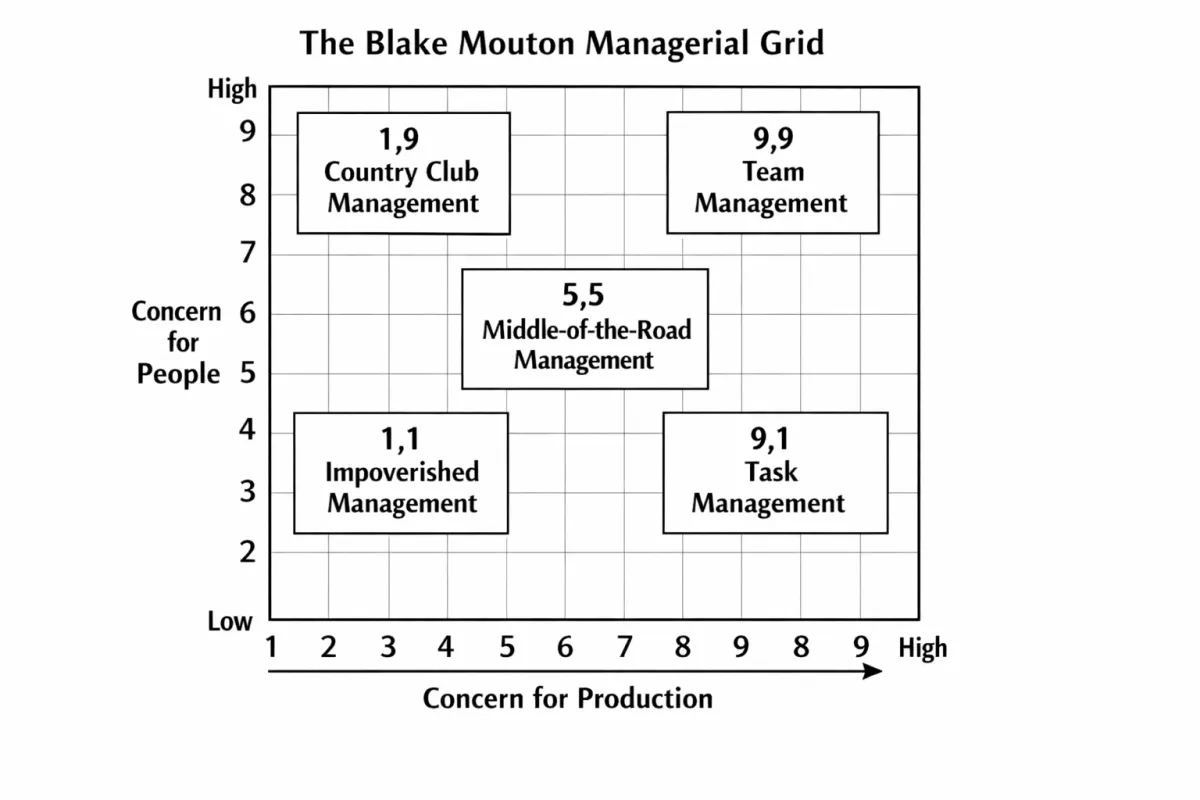
At its core, the model maps leadership across two axes:
Concern for People — empathy, wellbeing, relationships, motivation
Concern for Results — performance, productivity, targets, quality
Together, they create five distinct leadership styles that still show up in organisations today.
🧭 The Five Leadership Styles of the Managerial Grid
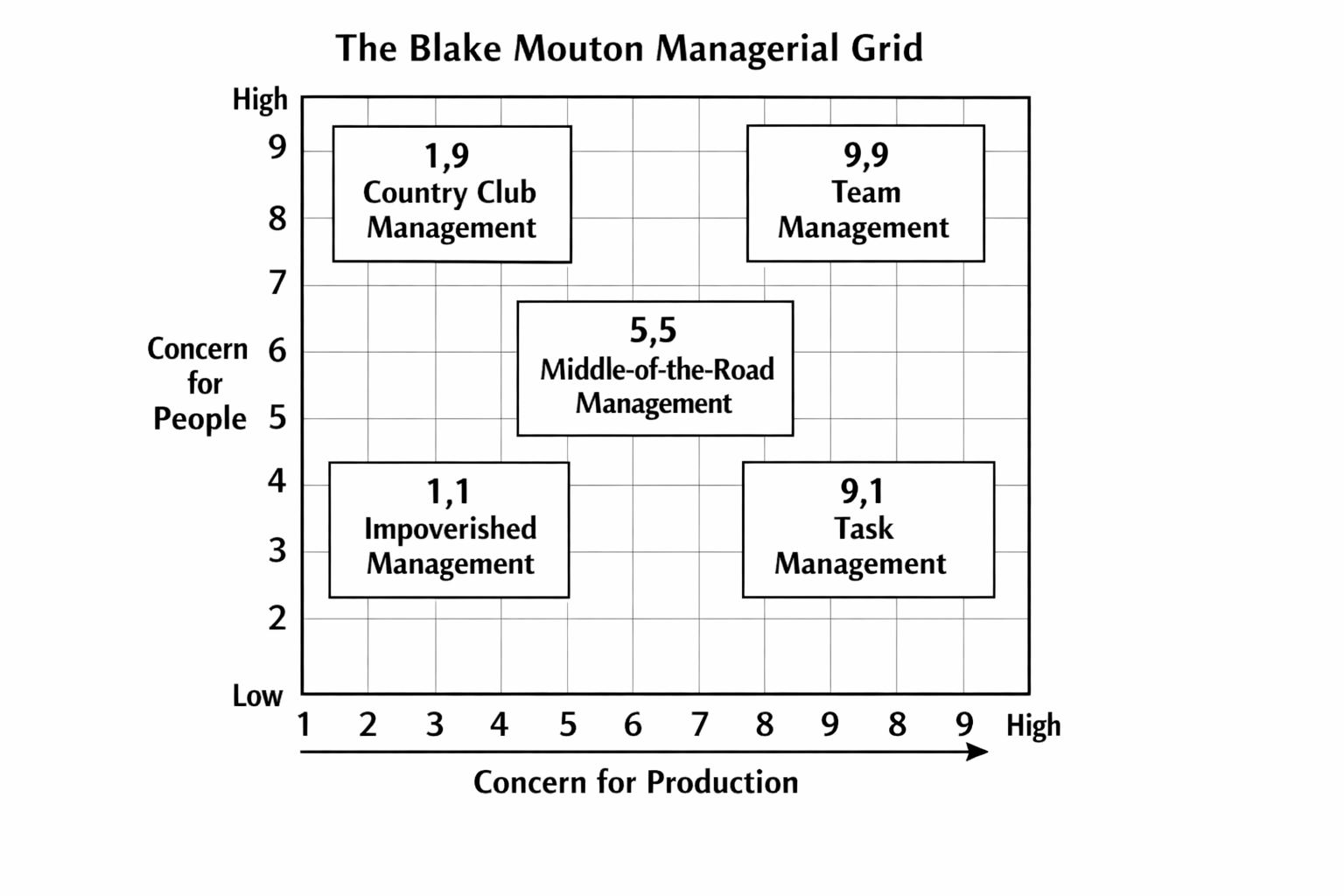
1. Impoverished Management (Low People, Low Results)
A hands‑off, disengaged style.
Leaders in this quadrant avoid involvement, make minimal effort and allow teams to drift.
Impact:
Low morale, low performance, unclear direction.
2. Country Club Management (High People, Low Results)
Warm, friendly, and supportive — but often at the expense of accountability.
Impact:
People feel valued, but performance stagnates and difficult conversations are avoided.
3. Produce‑or‑Perish Management (Low People, High Results)
A directive, task‑driven style focused on output above all else.
Impact:
Short‑term results may be strong, but stress, fear and burnout follow.
4. Middle‑of‑the‑Road Management (Medium People, Medium Results)
A balanced but cautious style.
Leaders try to keep everyone reasonably happy while maintaining acceptable performance.
Impact:
Stable but uninspiring; teams rarely reach their potential.
5. Team Management (High People, High Results)
The ideal leadership style in the model.
Leaders build strong relationships and drive high performance.
Impact:
High trust, high accountability, shared ownership and sustainable results.
This is the sweet spot — where people feel supported, challenged and motivated to deliver their best.
💡 Why the Managerial Grid Still Matters Today
1. It reveals your natural leadership default
Most leaders lean toward one axis:
People‑first but conflict‑averse
Results‑first but relationally blunt
Or stuck in the middle trying to please everyone
The grid helps you see your pattern clearly.
2. It explains team dynamics
If your team is:
anxious
overly comfortable
inconsistent
disengaged
or thriving
…the grid helps you understand why.
3. It connects leadership style to culture
Your position on the grid shapes:
psychological safety
accountability
collaboration
innovation
wellbeing
Culture is the shadow of leadership.
4. It gives leaders a development path
The goal isn’t perfection — it’s movement.
The grid shows you where you are and where you need to go.
🔄 How Leaders Can Use the Managerial Grid
1. Diagnose your current style
Ask yourself:
Do I prioritise people or results when under pressure?
Which quadrant do I default to?
2. Gather feedback
Your team often sees your style more clearly than you do.
3. Strengthen your weaker axis
If you’re high on results but low on people:
listen more
show empathy
build trust
If you’re high on people but low on results:
set clearer expectations
hold accountability
raise ambition
4. Aim for Team Management
This is where:
relationships are strong
performance is high
people feel both valued and stretched
It’s the leadership zone where culture and results reinforce each other.
✨ A Final Thought
The Blake‑Mouton Managerial Grid reminds us that leadership is a balance — not a trade‑off.
You don’t have to choose between caring for people and driving performance.
Great leaders do both.
They create environments where people feel supported and inspired to deliver their best.
That’s the heart of modern leadership — and the enduring power of the Managerial Grid.