The Burke–Litwin Model: The Deep Structure Blueprint for Organisational Performance and Change
The Burke–Litwin Model: The Deep‑Structure Blueprint for Organisational Performance and Change
Most change models focus on surface‑level actions — new processes, new structures, new goals.
But real organisational performance is shaped by something deeper: the interplay between culture, leadership, systems, and individual motivation.
The Burke–Litwin Model of Organisational Performance and Change is one of the most comprehensive frameworks ever created to understand this complexity. Developed by W. Warner Burke and George Litwin, it maps the 12 key drivers that determine how an organisation behaves — and how it performs.
At its heart, the model makes one thing clear:
If you want to change performance, you must understand the system — not just the symptoms.
🧭 What Is the Burke–Litwin Model?
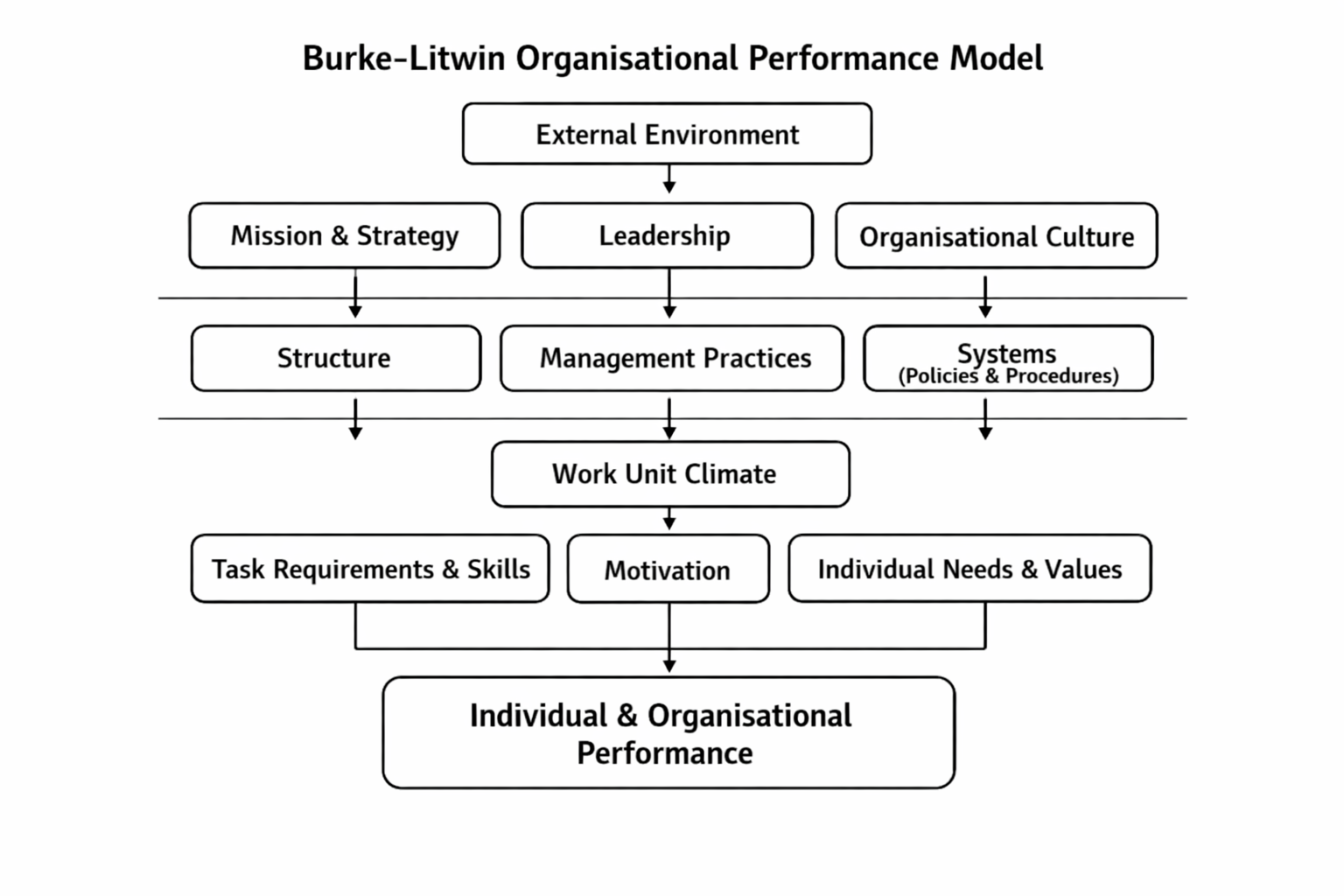
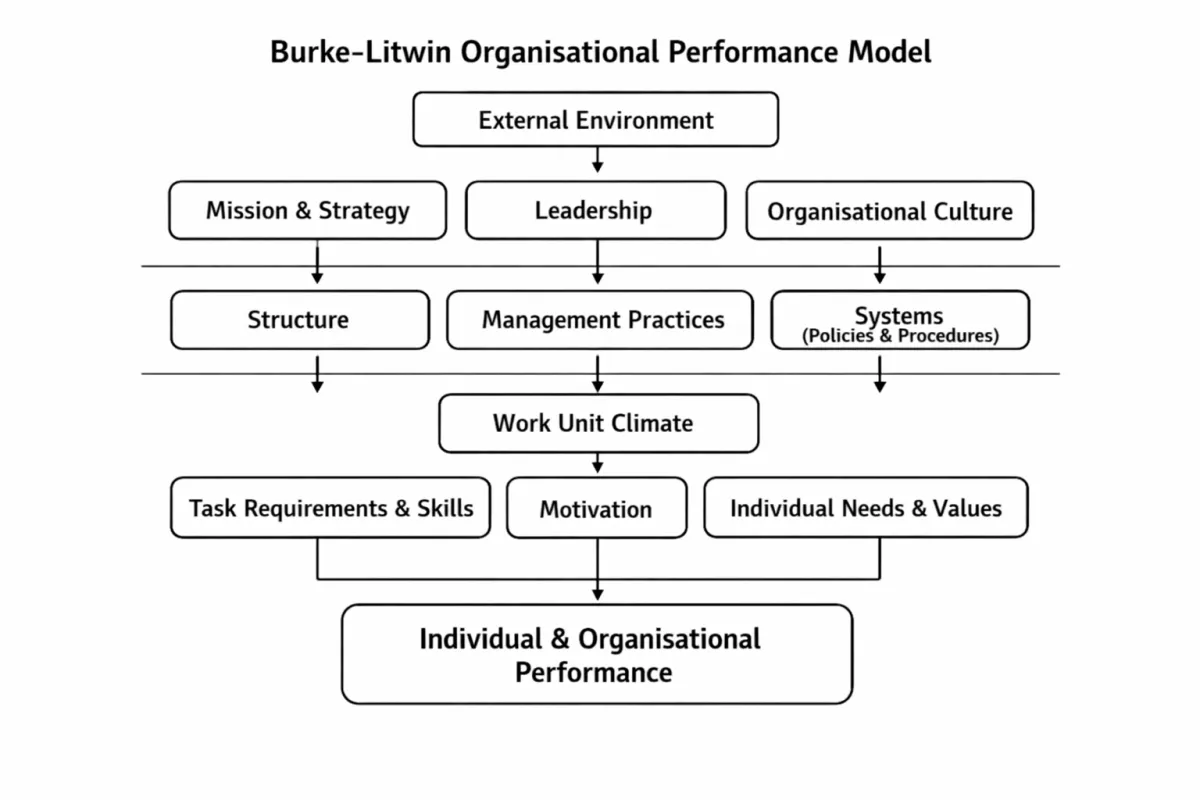
The model identifies 12 interconnected elements that influence organisational performance. These elements are arranged in a hierarchy from deep, transformational drivers to surface‑level, transactional factors.
🔥 Transformational Factors (Top of the Model)
These are the big levers — when they shift, everything else shifts.
External Environment
Market forces, regulation, competition, technology — the context you operate in.Mission & Strategy
The organisation’s purpose and the plan to achieve it.Leadership
The behaviours, values and style of those in positions of influence.Organisational Culture
The shared norms, beliefs and “how we do things around here.”
These factors shape the entire system. Change here is deep, disruptive and transformational.
⚙️ Transactional Factors (Middle of the Model)
These are the operational levers — they shape day‑to‑day experience.
Structure
Roles, hierarchy, reporting lines.Management Practices
How managers plan, organise and support their teams.Systems (Policies & Procedures)
Performance management, rewards, communication flows, processes.
These factors influence how work gets done.
👥 Individual Level Factors (Bottom of the Model)
These determine how people show up.
Work Unit Climate
The local team environment — trust, communication, safety.Task Requirements & Individual Skills
What the job demands and what people are capable of.Individual Needs & Values
What motivates people and what they care about.Motivation
The energy and willingness to act.Individual & Organisational Performance
The outcomes — productivity, quality, engagement, wellbeing.
These factors are the visible outputs of the deeper system.
💡 Why the Burke–Litwin Model Matters for Leaders
1. It explains why change often fails
Most organisations try to fix performance by tweaking:
processes
structures
KPIs
But if the real issue is leadership, culture, or strategy, those tweaks won’t stick.
The model shows where the real levers are.
2. It connects behaviour to the system
If people are disengaged, resistant, or inconsistent, the model encourages leaders to ask:
What in the environment is shaping this behaviour?
What in the system is reinforcing it?
It shifts the conversation from “fix the people” to “fix the conditions.”
3. It gives leaders a diagnostic map
When performance dips, leaders can analyse:
Is this a cultural issue?
A leadership issue?
A systems issue?
A motivation issue?
Or a misalignment between them?
It’s a structured way to find the root cause.
4. It supports sustainable, systemic change
Transformational change happens at the top of the model.
Transactional change happens in the middle.
Behavioural change happens at the bottom.
The model helps leaders sequence change in the right order.
🔧 How Leaders Can Apply the Burke–Litwin Model
1. Start with the external environment
What’s changing around you?
How is it impacting expectations, culture, or strategy?
2. Revisit mission and strategy
Are they clear?
Are they understood?
Are they still relevant?
3. Examine leadership behaviours
Leaders shape culture.
Culture shapes everything else.
4. Audit systems and structures
Do they reinforce the behaviours and outcomes you want?
Or do they contradict them?
5. Look at the local climate
Teams experience the organisation through their immediate manager.
6. Understand individual motivation
What drives your people?
What blocks them?
7. Align the whole system
Performance improves when:
strategy
culture
leadership
systems
motivation
…all point in the same direction.
✨ A Final Thought
The Burke–Litwin Model reminds us that organisations are living systems. You can’t change one part without affecting the rest.
High performance isn’t created by pushing harder — it’s created by aligning the system so that great performance becomes the natural outcome.
Leaders don’t just manage tasks.
They shape the conditions in which people and organisations thrive.