Johari’s Window: The Leadership Model That Turns Self Awareness Into Trust
Johari’s Window: The Leadership Model That Turns Self‑Awareness Into Trust
Great leadership isn’t just about vision or strategy — it’s about understanding how you’re seen.
That’s where Johari’s Window comes in: a deceptively simple model that helps leaders build trust, improve communication and create psychologically safe teams.
🪟 What Is Johari’s Window?
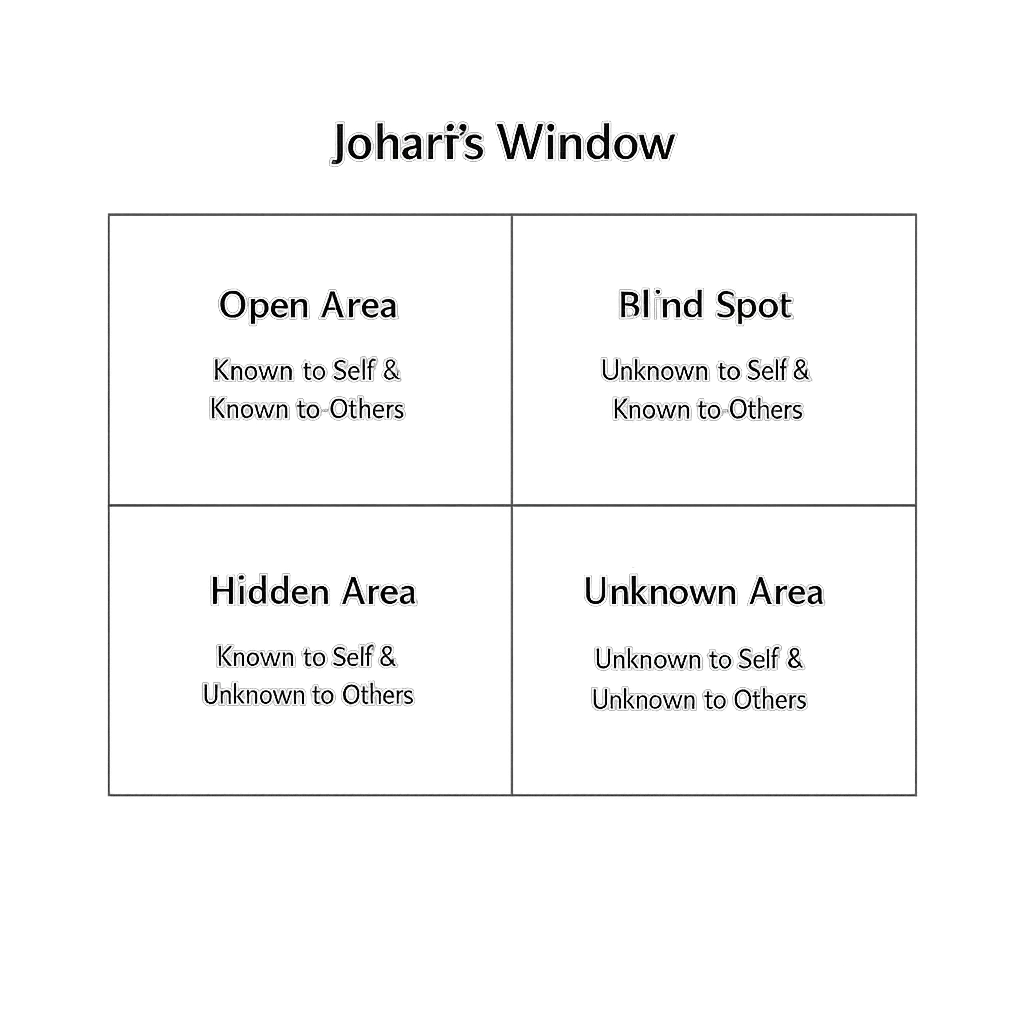
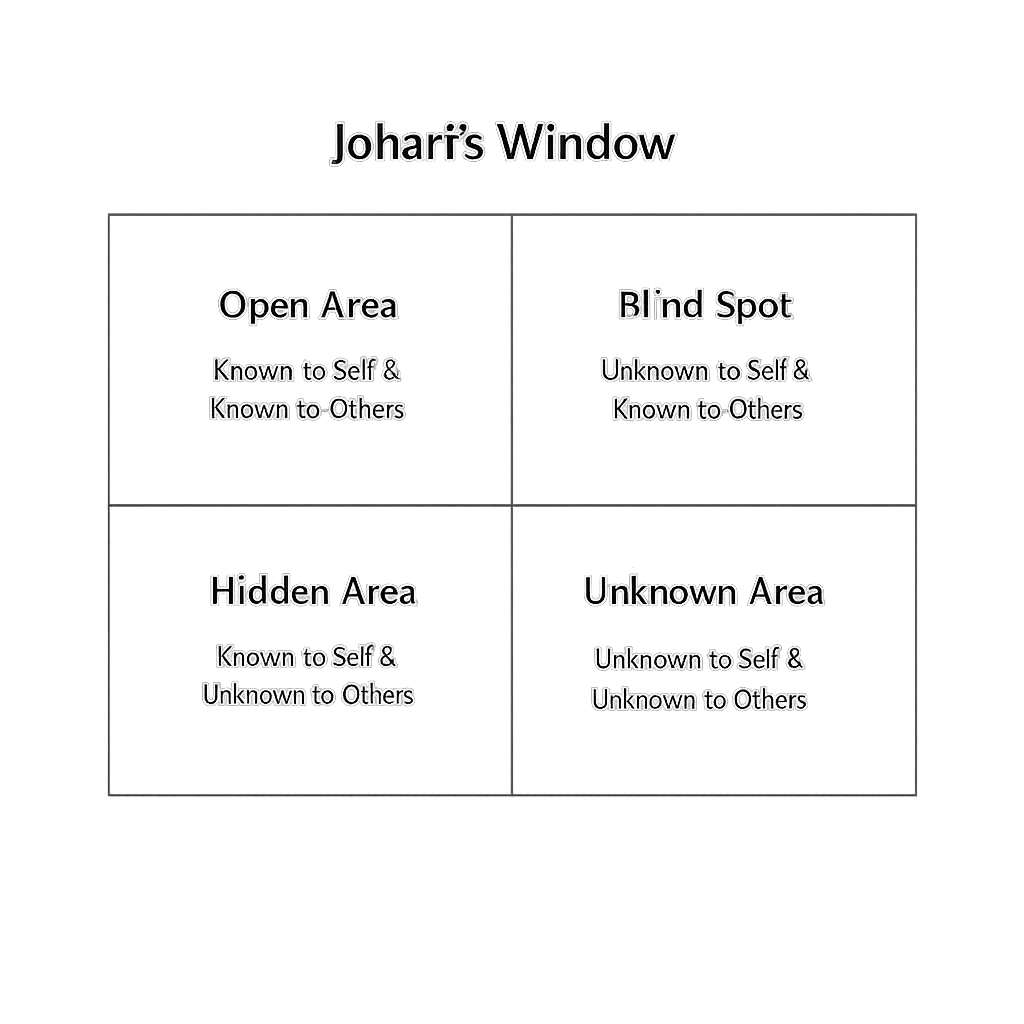
Developed by psychologists Joseph Luft and Harrington Ingham in 1955, Johari’s Window is a framework for understanding self‑awareness and interpersonal relationships. It divides what we know (and don’t know) about ourselves into four quadrants:
💡 Why It Matters for Leaders
Johari’s Window is more than a psychology model — it’s a Leadership mirror.
1. It Builds Trust Through Openness
Expanding the Open Area means sharing more of your intentions, values and reasoning.
When people understand why you lead the way you do, trust grows.
2. It Encourages Feedback
The Blind Area shrinks when leaders invite honest feedback — and listen without defensiveness.
That’s how blind spots become insights.
3. It Normalises Vulnerability
The Hidden Area reminds leaders that selective transparency is powerful.
Sharing your challenges or uncertainties doesn’t weaken authority — it humanises it.
4. It Unlocks Growth
The Unknown Area is where innovation and self‑discovery live.
Leaders who experiment, reflect, and stay curious expand this quadrant — and their capacity.
🔄 How to Apply Johari’s Window as a Leader
Ask for feedback regularly. Not just in reviews — in real conversations.
Share your thinking. Explain decisions and values openly.
Model vulnerability. Admit mistakes and learning moments.
Encourage reflection. Help your team explore their own windows too.
Over time, these behaviours expand the Open Area — the zone of mutual understanding where trust, collaboration and psychological safety thrive.
✨ A Final Thought
Leadership isn’t about having all the answers.
It’s about being open enough to learn, brave enough to share, and curious enough to grow.
Johari’s Window reminds us that the most effective leaders aren’t just self‑aware — they’re other‑aware too.